

Getting Started with Text Generation Tools
Learn the three most useful prompts for writing emails, summaries, and everyday communication.

Neural networks aren't perfect. Learn the practical techniques to spot errors, verify facts, and use AI responsibly in daily work.
Editorial Team
Written by the kohsson editorial team, focused on practical, clear guidance for using AI tools in daily life.
AI systems generate text, images, and ideas fast. But speed doesn't guarantee accuracy. They'll confidently write things that sound right but aren't. They'll cite sources that don't exist. They'll make up facts and present them as truth.
The thing is, you can't just trust the output because it came from a sophisticated tool. You need practical skills to catch errors before you share, publish, or act on what the AI produced. It's not about doubting AI — it's about being responsible with the results you use.
We've all seen this happen. Someone copies text from an AI tool into their email without checking. A fact is wrong. A statistic is made up. Credibility drops instantly. Your job is to be the human filter between the tool and the world.

You don't need to become a fact-checker expert. These practical methods catch the most common AI errors in minutes.
If the AI mentions a specific fact, statistic, or date — verify it independently. Search for the original source. Check reputable websites in that field. Don't assume because AI said it with confidence that it's accurate. Even a small detail matters. Wrong dates destroy credibility. Made-up statistics undermine your argument.
AI tools sometimes create fake citations. They'll mention a book that doesn't exist or an author who never wrote what they claim. This is called hallucination. Always check if a source actually exists before citing it. Look up the author. Find the publication date. Verify the quote matches the original text. One fake citation can damage your entire piece.
Change your mindset. Instead of accepting what you see, question it. Does this claim make sense? Is the logic solid or are there gaps? Could this be outdated information? AI learns from training data that has a cutoff date — it can't know what happened recently. Ask yourself what you'd need to verify each major point.
Different AI systems sometimes give different answers to the same question. If you're working with important facts, prompt multiple tools with the same query. If they agree, you've got more confidence. If they disagree, that's a red flag. It means the information is unclear or contested. That's when you need to dig deeper into human sources.
This guide provides educational information about AI verification techniques. The methods described are general best practices for checking AI-generated content. Different use cases — academic writing, professional communication, creative work — may require different verification approaches. For specialized fields like medicine, law, or finance, consult subject matter experts and primary sources. AI is a tool that requires human judgment to use responsibly.
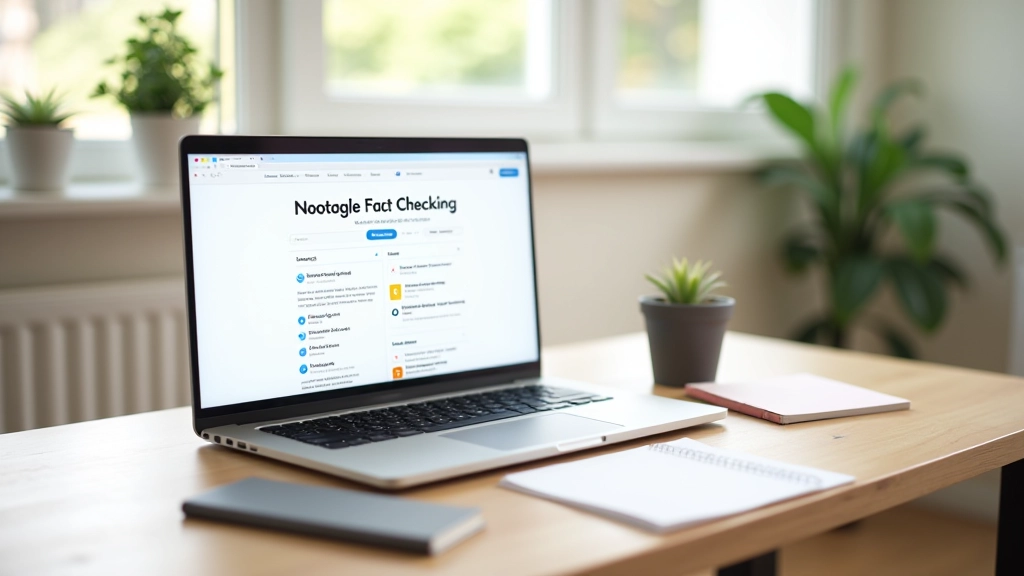
You've got tools available right now. Google Scholar lets you search academic papers and verify citations properly. Snopes and FactCheck.org maintain databases of common myths and false claims. When you see a statistic, search for it directly. Look for the original research, not just someone quoting it. News outlets like Reuters and AP have fact-checking teams that investigate viral claims.
The key isn't memorizing sources. It's developing a habit of checking. After a while, you'll spot questionable claims instantly. You'll know when something needs verification before you use it. This skill works whether you're using AI or reading anything else online. It's about thinking critically, not trusting appearances.
AI tools are genuinely useful. They save time. They help with brainstorming. They accelerate work. But they work best when you treat them as a starting point, not a finished product. Spend 10-15 minutes verifying the important parts. Check the facts that matter most to your work. Read through once with a critical eye. Ask yourself what you'd need to confirm.
This isn't paranoid. It's professional. It's the same thing you'd do with any source you weren't 100% sure about. AI just made it faster to produce content, which means verification became more important, not less. You're the quality control. You're the person responsible for what you put out into the world.
Start small. Pick one technique from the four we covered. Practice it on your next AI-generated piece. You'll get faster at spotting issues. You'll develop intuition about what needs checking and what doesn't. That's when AI becomes truly useful — when you can use it confidently because you know how to verify what it produces.
Learn the three most useful prompts for writing emails, summaries, and everyday communication.

Upscale, enhance, and fix common photo problems using neural networks.
Combine text and image tools into workflows. Automate tasks like document formatting and research.